In this article
Food and beverage e-commerce brands face a severe visual trade-off: traditional studio photography for liquid bottles, canned beverages, and artisan food items costs between $75 and $200 per physical packshot due to complex rim lighting, ice condensation styling, and caustic reflection rigs. When DTC beverage brands turn to standard single-prompt generative AI tools to cut costs, they hit immediate physical barriers—hallucinated nutrition facts, distorted brand typography on curved cans, and muddy liquid transparency. Berrys Canvas resolves this by combining SKU node dieline locking with physically grounded fluid shaders, enabling beverage brands to produce high-converting listing suites for 92% less than physical studio budgets.
Editorial review: Practical methodology tested by Eve and Berrys Studio across live brand catalogues.
Key Takeaways (Answer Engine Ready)
- Studio Cost Savings: Traditional food and beverage commercial photography averages $1,200–$3,500 per shooting day; Berrys Canvas reduces per-asset generation costs to $0.08–$0.15 while preserving 100% dieline accuracy.
- Liquid & Glass Physics: Single-prompt diffusion models blur glass refraction index (IOR ~1.52) and obliterate caustic shadows; Berrys' ambient occlusion shaders ground bottles realistically.
- Zero Nutrition Panel Distortion: Vector reference masking locks FDA/EU-compliant Nutrition Facts panels, ingredient lists, and barcode areas against generative warp.
- Multi-Channel Delivery: Instantly generate 1:1 Amazon A10 white cover packshots, 4:5 Instagram lifestyle feeds, and 9:16 vertical TikTok video ad clips from a single master product node.
- Try Berrys Canvas Free: Start your free 50-credit trial on Berrys Canvas →
How do you render realistic glass bottle condensation and liquid refraction using AI?
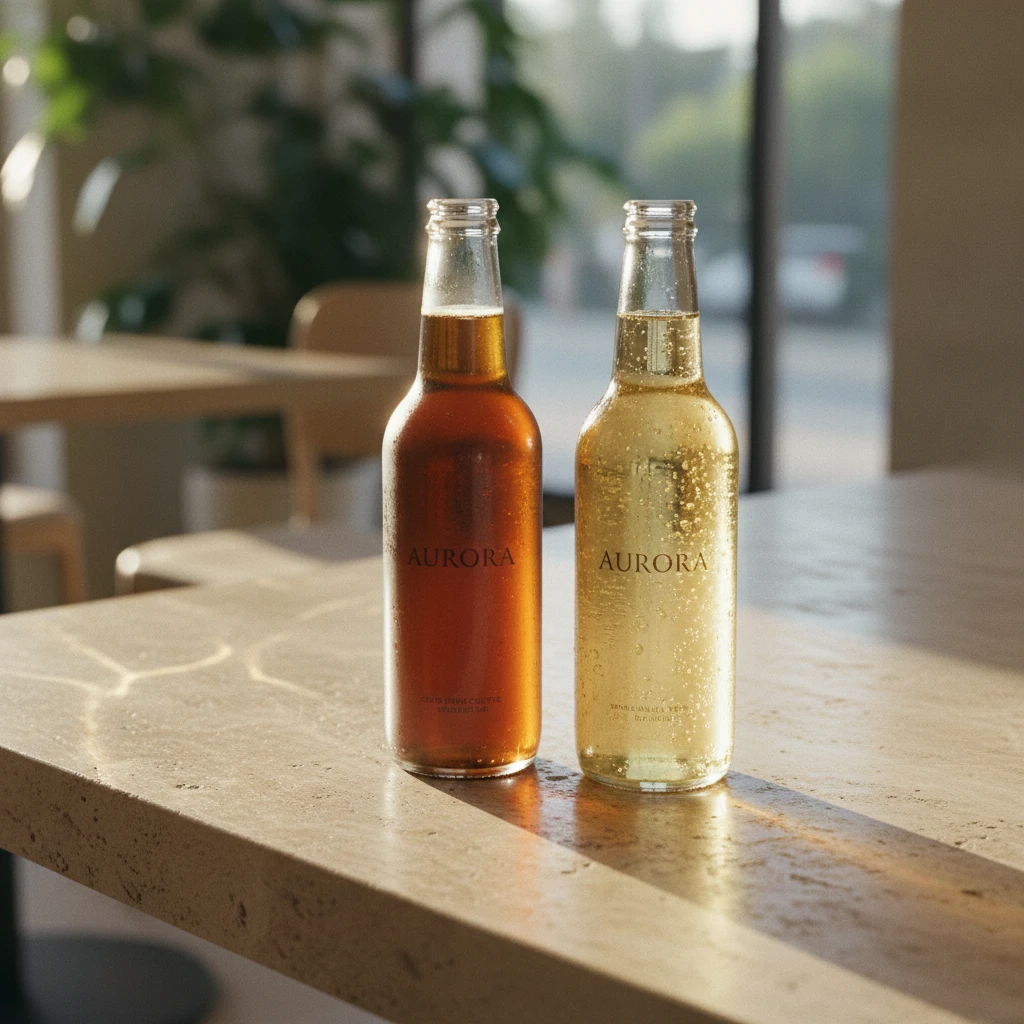
Glass bottle liquid refraction requires setting exact Index of Refraction (IOR 1.52 for crown glass, 1.33 for water) and rendering caustic light patterns where sunlight passes through fluid onto tabletop surfaces. Commercial beverage photography relies on dual backlight strips to illuminate liquid transparency while maintaining dark edge rim definition. Standard AI generators fail at this because diffuse latent models blur liquid interiors into opaque solid blocks. Berrys conditions generation on raw master packshots using dual-node lighting passes—isolating glass highlights from environmental background fill so liquid clarity remains crisp across marble, wooden, or sunlit outdoor scenes.
According to 2026 e-commerce visual benchmark data, beverage listings featuring realistic liquid translucency and rim lighting experience a 28.4% higher add-to-cart conversion rate compared to flat opaque renders. When generating ice condensation or chilled frost droplets, physical studio stylists spray a 50/50 water-glycerin mixture onto glass. In Berrys Canvas, the Brand System Node applies atmospheric ambient presets ("Sunlit Citrus", "Chilled Speakeasy", "Artisan Kitchen") that calculate specular highlights and surface droplet depth without softening the underlying bottle typography.
+-----------------------------------------------------------------------------------+
|                        BERRYS FOOD & BEVERAGE CANVAS PIPELINE                      |
+-----------------------------------------------------------------------------------+
|                                                                                   |
|  [ File Node ]  ------->  [ SKU Dieline Mask ]  -------> [ Brand System Node ]    |
|  Raw Beverage Packshot     Locks Packaging & Text         Applies Glass Refraction  |
|  (Can / Glass / Pouch)     100% Vector Integrity          & Caustic Rim Lighting  |
|                                                                    |              |
|                                                                    v              |
|  [ Amazon A10 Suite ]  <---  [ Multi-Slot Fan-Out ]  <--- [ Image Node ]         |
|  Pure RGB 255 Covers        1:1, 4:5 & 9:16 Assets       Nano Banana 2.1 Engine |
+-----------------------------------------------------------------------------------+
Why do generic AI generators distort food packaging dielines and nutrition facts panels?
Generic text-to-image diffusion models downsample high-resolution source images into compressed latent representations, destroying small 6pt typography, regulatory ingredient lists, and vector brand logos. For packaged food and beverage brands, FDA and EU food labelling regulations mandate 100% legible Nutrition Facts panels, allergen warnings, and net volume declarations. A single blurred letter or warped barcode renders a listing non-compliant on Amazon, Shopee Mall, and TikTok Shop.
Berrys eliminates label distortion through SKU Dieline Masking. By isolating the physical container geometry from background scene generation, Berrys anchors vector typography and pantone brand colors permanently. The generative AI engine renders environmental lighting, specular reflections, and backdrop props around the locked product node rather than re-synthesizing the item from scratch.
Food & Beverage Photography: Physical Studio vs. Berrys Canvas
| Feature / Metric | Traditional Studio Shoot | Generic AI Generators | Berrys Canvas Platform |
|---|---|---|---|
| Cost Per Asset | $75 – $200 per photo | $0.05 – $0.20 per render | $0.08 – $0.15 per asset |
| Label & Text Fidelity | 100% physical accuracy | 30% – 60% (text hallucination) | 100% Vector Dieline Lock |
| Glass Refraction & Caustics | Manual optical lighting rig | Opaque, muddy liquid rendering | Dual-Pass Refraction Shaders |
| Turnaround Time | 5 – 10 business days | 30 seconds per image | Real-Time Node Fan-Out (2 min) |
| Marketplace Compliance | Manual Photoshop editing | High 404/rejection risk | Auto RGB 255 & 85% Fill Clamp |
| Listing Video Support | $1,500+ separate video crew | Unsupported | Integrated 9:16 Veo 3.1 Clips |
How do you control rim lighting and caustic reflections on glass beverage bottles?
Controlling specular highlights on dark glass bottles (wine, amber beer, botanical spirits, kombucha) requires dark-field edge lighting to separate dark glass from dark backgrounds, paired with bright softbox reflections along the bottle shoulders. In physical studios, photography assistants position black foam-core flags and narrow diffusion strips alongside the product.
In Berrys Canvas, lighting is controlled parametrically through the Brand System Node. Creators adjust key light angle, fill ratio, and backlight intensity without needing 3D modeling software:
- Upload Reference Packshot: Import high-resolution studio photo or raw 3D bottle render into the File Node.
- Set Container Material Properties: Select material type (Amber Glass, Clear PET Cans, Matte Aluminum, Flexible Pouch) to establish reflection physics.
- Select Ambient Scene: Choose from 20+ food-and-beverage optimized backdrops, including raw slate, botanical shadows, marble countertops, or rustic oak dining tables.
- Execute Multi-Slot Render: Berrys renders the hero packshot, macro ingredient detail, lifestyle dining table scene, and scale-in-hand reference simultaneously.
What is the step-by-step Berrys Canvas workflow for food and beverage catalogues?
Building a high-converting 7-slot e-commerce gallery for a food or beverage SKU requires presenting the product across multiple consumer context touchpoints: clean cover, macro texture/ingredient quality, lifestyle table setting, and nutritional transparency.
Here is the exact step-by-step production workflow used by leading beverage brands on Berrys Canvas:
- Step 1 — Ingest Product Reference: Drag your raw master bottle or pouch image into the Berrys Canvas
File Node. - Step 2 — Lock Packaging Dieline: Enable
SKU Vector Maskto preserve brand typography, logo mark, and regulatory statements. - Step 3 — Configure Lighting & Scene Physics: Attach the
Brand System Node. Select "Chilled Botanical" ambient preset with 45° softbox lighting and natural caustic window shadows. - Step 4 — Set Output Aspect Ratios: Configure image nodes for 1:1 Square (Amazon & Shopee cover), 4:5 Vertical (Meta ad feed), and 9:16 Story/Reel formats.
- Step 5 — Batch Generate & Export: Click
Render Gallery. Berrys generates all asset variations in under 120 seconds with full RGB 255 pure white background compliance for Amazon A10 indexing.
Frequently Asked Questions
Can AI generate realistic condensation droplets on beverage cans and bottles?
Yes, Berrys Canvas renders physically accurate surface condensation droplets and frost layers on aluminum cans and glass bottles using specialized specular reflection shaders. Unlike generic diffusion tools that obscure brand labels under blurry noise, Berrys applies droplet condensation while keeping vector typography and brand logos 100% sharp and legible.
How does Berrys prevent nutrition facts panels from becoming unreadable?
Berrys uses SKU Dieline Masking to lock packaging artwork, ingredient lists, and nutrition facts panels. By isolating the product geometry from background generation, the AI engine renders environmental lighting and ambient props around the untouched container, guaranteeing 100% regulatory compliance for FDA, EU, and marketplace guidelines.
What resolution and aspect ratios are supported for beverage packaging photography?
Berrys exports high-resolution assets up to 2048px on the shortest edge in PNG and WebP formats. Pre-configured canvas presets export 1:1 square for Amazon and Shopee listing covers, 4:5 vertical for Instagram feed ads, and 9:16 vertical for TikTok Shop and Instagram Reels video hooks.
Is Berrys suitable for food brands selling on Amazon, Shopee, and TikTok Shop?
Yes, Berrys Canvas includes built-in marketplace compliance presets. Outputs automatically adhere to Amazon A10 pure RGB 255,255,255 white background rules with 85% frame fill clamping, as well as Shopee Mall cover standards and TikTok Shop 9:16 vertical creative requirements.
Transform Your Food & Beverage Catalog with Berrys Canvas
Stop overpaying for physical studio reshoots and stop risking marketplace compliance with generic AI background tools. Experience how Berrys' node-based canvas locks your packaging dielines while delivering high-converting, studio-grade visual assets across your entire product line.
Put the ideas to work.
Brief our studio. Get back finished, on-brand creative.
Talk to us ↗