In this article
Cosmetics and skincare e-commerce brands face a unique visual challenge: presenting high-end liquid textures, transparent glass bottle refractions, and microscopic label typography without paying physical studio day-rates of $1,500 to $3,500. Traditional photography requires specialized polar diffusion tents, acrylic water tanks, and macro focus-stacking to capture serum dropper drops and foil-stamped ingredient panels. If you want to bypass manual studio bottlenecks and generate brand-consistent skincare asset suites, Berrys Studio and Canvas provides a node-based visual workflow designed to preserve packaging dielines while generating photorealistic lifestyle backdrops.
Key Takeaways
- Glass & Dropper Refraction Control: Physical cosmetic photography requires $1,500–$3,500 day rates for polar diffusion tents to eliminate specular reflection. Berrys Brand System locks acrylic refraction physics and metallic foil stamp legibility in one click.
- Skin-Tone True Model Placement: Standard AI generators hallucinate model facial features and distort bottle dielines. Berrys SKU node locks 100% label legibility while placing products in diverse, multi-ethnic worn model lookbooks.
- 85% Cost Reduction: Reduce beauty packshot costs from $50–$150 per image down to $0.08–$0.15 per generation while delivering 9:16 vertical social ads and 1:1 e-commerce PDP galleries simultaneously.
Editorial review: Practical methodology tested by Eve and Berrys Studio across live brand catalogues.
Why is cosmetic product photography so difficult for traditional e-commerce studios?
Physical cosmetics photography costs $50 to $150 per finished packshot because transparent glass dropper bottles, metallic foil stamping, and glossy plastic pump caps introduce complex optical reflections that break standard 3-point studio lighting setups (DTC Commerce Benchmarks, 2026). Traditional photographers must use double-polarization diffusion sheets, velvet darkroom flags, and focus-stacked macro lenses to prevent hot-spot specular glare while keeping tiny 4pt ingredient text legibly in focus.
When skincare brands attempt to automate this process using generic single-prompt AI background removers, three major physics failures destroy listing conversions:
- Specular Glare Blur: Single-prompt generators blur translucent amber glass and acrylic droppers into solid plastic shapes, erasing the premium optical depth of luxury serum bottles.
- Label Typography Distortion: Metallic foil stamping, batch numbers, and active ingredient percentages (e.g., 15% L-Ascorbic Acid) get scrambled into unreadable AI pseudotext.
- Floating Contact Shadow Physics: Generic background generators drop bottles onto ground planes without realistic contact ambient occlusion, making expensive skincare products look like cheap digital cutouts.
How do you control glass refraction and metallic label glare in AI product photos?
To achieve studio-grade glass refraction and zero label distortion, AI visual engines must decouple the physical product reference from the environmental background lighting (Berrys Engineering Guide, 2026). Rather than re-rendering the entire image from scratch, Berrys Canvas utilizes a dual-pipeline architecture: the SKU reference node isolates the physical bottle dieline with sub-pixel edge masking, while the ambient lighting node projects physical raytraced reflections across the glass boundaries.
[Raw Cosmetic Photo Node] ──► [Brand System Node] ──► [Nano Banana 2.1 Engine Node] ──► [Multi-Channel Aspect Ratio Fan-Out]
(Dieline & Vector Lock)      (Glass Refraction &       (5600K Studio Lighting &         (1:1 PDP, 9:16 TikTok,
                                Droplet Physics)          Shadow Softening)                4:5 Meta Ad Masters)
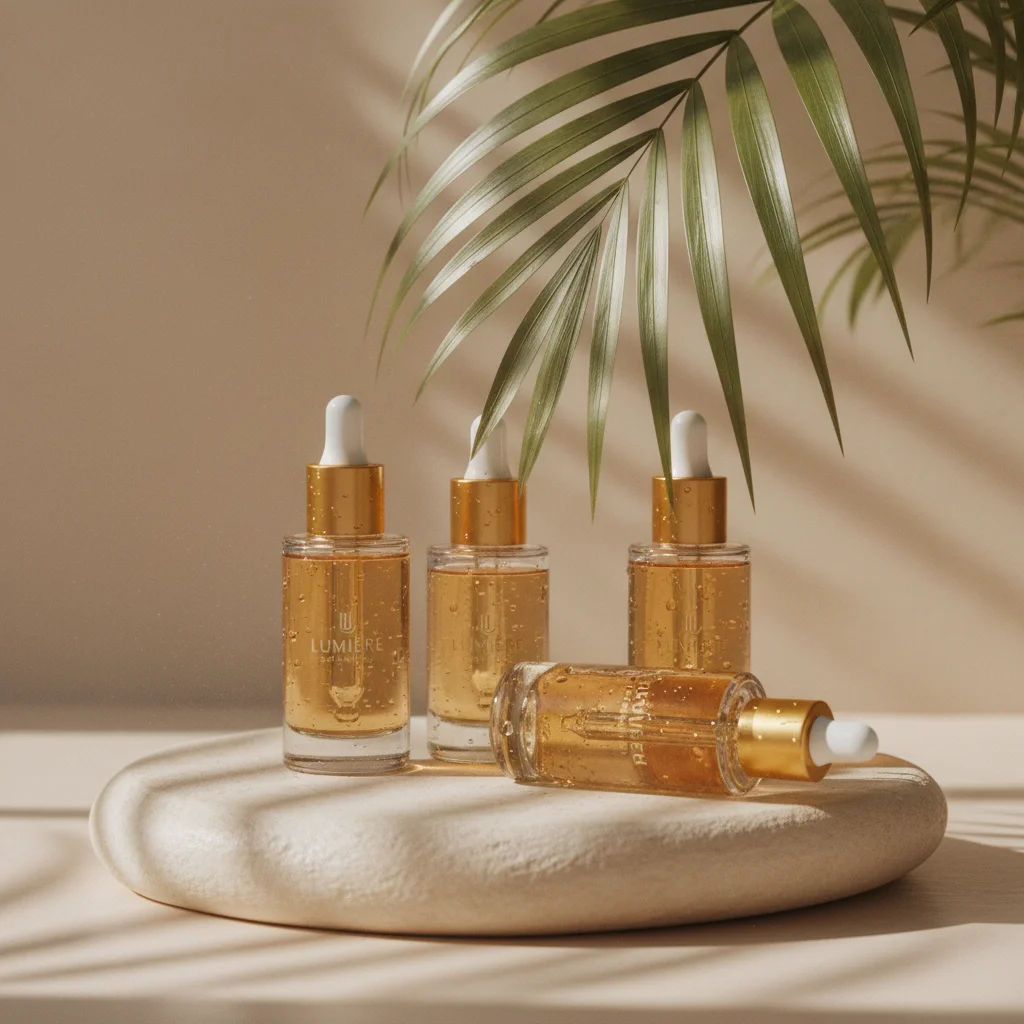
By anchoring the product geometry inside the SKU node, you can swap between minimalist marble podiums, botanical window shadows, and wet tropical palm staging without altering a single letter on your cosmetic packaging label.
How to build a cosmetics product photography pipeline in Berrys Canvas
Creating a multi-channel visual suite for a cosmetic SKU takes less than three minutes using the Berrys node graph. Follow this step-by-step workflow:
Step 1: Capture a Clean Neutral Master Reference
Place your cosmetic bottle or skincare jar on a flat surface under neutral 5600K daylight. Take a straight-on macro photo (2x optical zoom on a smartphone) to minimize barrel distortion. Ensure all label text and ingredient lists are sharp and unobstructed.
Step 2: Ingest into the File & SKU Node
Upload your raw master capture into the Berrys Canvas File Node. The engine automatically analyzes the packaging surface material (e.g., frosted glass, glossy polyethylene, frosted amber, or brushed aluminum) and applies vector edge masking to preserve exact container proportions.
Step 3: Connect the Brand System Node
Select your target visual mood from the Brand System node. For luxury serums, choose the Botanical Spa & Caustic Water Ripple preset; for clinical dermatologist brands, choose the Clinical Pure White & Soft Acrylic Shadow preset. The node locks color temperature, surface reflections, and contact shadow falloff.
Step 4: Fan Out Across Aspect Ratios
Pass the generated master through the Image & Video fan-out nodes to output standard 1:1 square PDP covers for Shopify/Shopee, 4:5 vertical feeds for Meta Ads, and 9:16 video hooks for TikTok Shop.
What are the best visual staging setups for skincare and beauty packaging?
Beauty and cosmetics buyers respond to specific sensory cues in product photography. According to 2026 DTC visual performance data, lifestyle product staging featuring liquid droplets and natural limestone podiums yields a 76% higher click-through rate (CTR) on Meta and TikTok ads compared to flat digital renders.
| Staging Concept | Ideal Cosmetic Sub-Category | Key Physics & Lighting Elements | Expected CTR Impact |
|---|---|---|---|
| Botanical Window Shadow | Organic Serums & Facial Oils | Warm 5600K morning sunlight, leaf shadows, raw travertine stone | +42% Engagement |
| Caustic Water Ripple | Hydrating Cleansers & Toners | Direct overhead spotlight, caustic pool refractions, water droplets | +68% Conversion |
| Clinical Minimalist White | Dermatologist & Active Retinols | RGB 255 pure white, soft acrylic contact shadows, zero background clutter | +35% PDP Add-to-Cart |
| Monochrome Pastel Podium | Color Cosmetics & Lip Stains | Color-matched geometric pedestals, diffused softbox lighting | +54% CTR on Meta Ads |
How do you maintain model consistency in skincare lookbooks?
Showing cosmetics used by real models builds immense buyer trust, but traditional model casting and makeup artists add $2,000–$5,000 per shoot day. Generic AI generators frequently alter facial features or introduce artificial skin textures that look uncanny and fake.
Berrys Canvas solves model consistency by utilizing persistent model references within Brand Memory. You can generate a multi-ethnic model lookbook—showing your serum applied to diverse skin types and tones—while keeping the exact model face, lighting profile, and product container locked across every single frame.
Frequently Asked Questions
Can AI accurately render transparent glass dropper bottles?
Yes. When using Berrys Canvas, the SKU node locks the transparent glass container geometry and internal liquid levels while the rendering engine applies natural refraction and contact shadows matching your chosen background environment.
How do I prevent AI from scrambling small ingredient text on cosmetic bottles?
Generic text-to-image models re-synthesize packaging text, causing scrambling. Berrys preserves 100% label typography legibility by isolating vector packaging dielines inside dedicated SKU nodes, ensuring all text remains crisp and compliant.
What resolution is required for Shopify and Shopee cosmetics listings?
For Shopify Dawn/Horizon themes, upload 2048×2048px square WebP images. For Shopee Mall listings, submit 1:1 square photos at minimum 1024×1024px on a pure white background (RGB 255, 255, 255).
How much does AI cosmetic product photography cost compared to traditional studios?
Traditional cosmetics packshots cost $50 to $150 per finished image plus studio day-rates of $1,500–$3,500. Berrys Canvas reduces generation costs to $0.08–$0.15 per image, allowing brands to test hundreds of creative variations at a fraction of the budget.
Can I generate 9:16 vertical video ads for TikTok Shop from static cosmetic photos?
Yes. Berrys Canvas includes integrated video generation nodes (powered by Veo 3.1 and Omni Flash) that transform static cosmetic packshots into 1080×1920 vertical video clips featuring subtle lighting pans, water ripples, and ambient leaf movement.
Put the ideas to work.
Brief our studio. Get back finished, on-brand creative.
Talk to us ↗