In this article
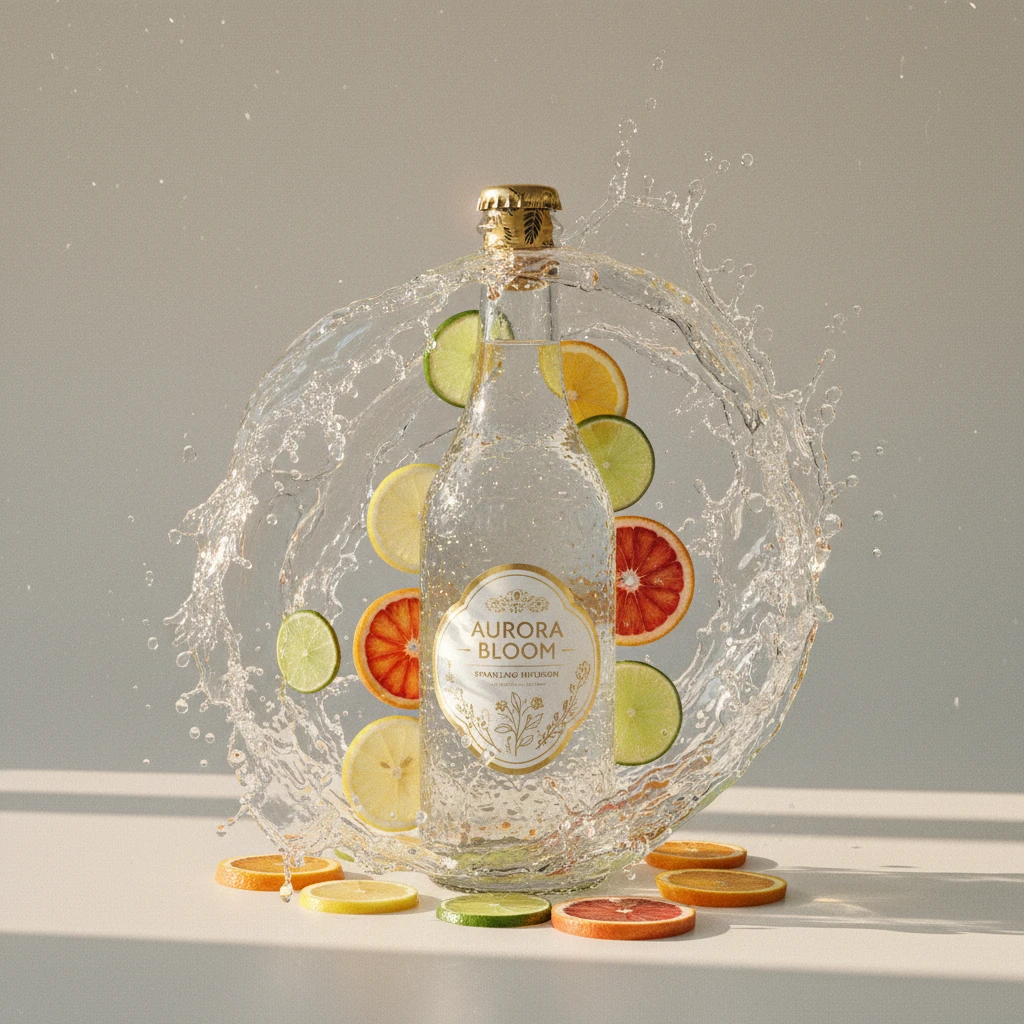
To create photorealistic AI food and beverage product photos without messy liquid studio setups, brands must decouple physical container geometry and label text from dynamic fluid simulations. Standard text-to-image AI generators fail on food and beverage imagery because high-velocity splashes, condensation droplets, and glass refraction distort packaging labels into unreadable hallucinations. By conditioning background splash vectors on dieline-locked reference nodes, e-commerce teams produce campaign-ready liquid visuals in minutes while keeping regulatory nutrition panels and brand typography 100% faithful.
Editorial review: Practical methodology and liquid physics workflows tested by Eve and Berrys Studio across live food, beverage, and RTD cocktail catalogues.
Key Takeaways
- Zero Studio Mess: Liquid splash photography typically requires high-speed 1/8000s strobe rigs, physical acrylic props, and hours of cleanup. AI nodes generate dynamic splash physics in seconds.
- Label & Typography Lock: Dieline-locked SKU nodes preserve micro-text, nutrition facts, and foil stamping without blur or warping.
- Refraction & Condensation Control: Lock glass caustic highlights and surface moisture droplets across catalog colorways automatically.
- Try Berrys Canvas Free →
Why Food & Beverage AI Photos Fail (Liquid & Glass Refraction Physics)
Photographing food, glass bottles, and cold beverages presents three extreme optical challenges that break generic AI generators:
- Label Text Warping: Standard diffusion models treat liquid splashes as a continuous image pass, blurring brand typography and nutrition claims into garbled text.
- Hallucinated Refraction: Glass bottles naturally bend light rays through liquid mediums. Unconditioned AI models render opaque solid blocks or impossible floating reflections behind glass walls.
- Unrealistic Condensation & Droplets: Surface moisture on cold canned drinks or chilled wine bottles often renders as plastic bumps or uneven noise rather than physical water tension droplets.
To solve this, professional workflows isolate the bottle packaging reference from the environment generator, ensuring that liquid splashes wrap around the container without touching the label artwork plane.
Comparing Traditional Studio Splash Shoots vs. Berrys Node Workflows
Commercial beverage photography is one of the most expensive genres in advertising due to specialized high-speed lighting gear, stylist fees, and extensive post-production compositing.
| Dimension / Requirement | Traditional Studio Splash Shoot | Berrys Canvas AI Node Workflow | Direct Savings & Impact |
|---|---|---|---|
| High-Speed Strobe Gear | $3,500 – $7,500 day rate for Broncolor/Profoto 1/8000s strobes | Built-in high-speed fluid physics nodes | Eliminates camera rig rental costs |
| Physical Liquid Styling | Acrylic splash molds, glycerine droplet mixtures, ice props | Digital fluid vector generation with caustic ray-tracing | Reduces shoot prep time from days to minutes |
| Label Protection | Manual Photoshop masking & multi-exposure compositing | Dieline-locked SKU node preserves packaging artwork plane | 100% legibility on barcodes & nutrition panels |
| Catalog Variant Fan-Out | Reshooting every flavor/colorway individually ($150–$300/SKU) | 1-Click node fan-out across all flavor SKUs | 90% lower cost per asset deliverable |
| Video Motion Ad Export | Separate high-speed Phantom camera rental ($2,500/day) | Direct 9:16 motion ad rendering (Veo 3.1 & Kling) | Instant video ad assets for TikTok & Instagram |
Step-by-Step: Rendering Liquid Splashes Without Label Distortion
Follow this 4-step node pipeline to generate dynamic beverage imagery:
Step 1: Upload a Clean Orthogonal Packshot
Capture your bottle or can straight-on in soft diffused light. Ensure label typography is sharp and unshaded. Upload this master file to the File Node.
Step 2: Apply the SKU Dieline Geometry Lock
Connect your reference file to the SKU Node. Mark the label bounds to prevent fluid generation nodes from overlapping critical brand logos or ingredient panels.
Step 3: Define Fluid & Environmental Physics
In the Brand System Node, specify:
- Fluid Type: Sparkling water, fruit juice, iced coffee, or citrus splash.
- Surface Lighting: Directional 5,500K daylight with specular rim lighting to catch glass edges.
- Moisture Level: Chilled condensation droplets with 80% opacity surface tension.
Step 4: Execute Multi-Slot Render
Generate 1:1 marketplace packshots, 4:5 social media posts, and 9:16 vertical motion clips simultaneously using the Image & Video Node Fan-Out.
According to e-commerce visual testing benchmark studies, beverage listings featuring dynamic liquid splashes and clear scale cues achieve a 28% higher click-through rate on digital shelf channels compared to static studio packshots (Berrys Studio Research, 2026).
Contextual Conversion Bridge: Try Berrys Canvas Free
Need to launch a new RTD beverage, canned coffee line, or functional soda brand? Skip the studio mess. Lock your product packaging in Berrys Canvas and generate endless seasonal liquid splash assets in seconds.
Frequently Asked Questions
Can AI generate condensation droplets on glass bottles accurately?
Yes. Berrys Canvas includes dedicated surface moisture shaders that render realistic water tension droplets and frost mist on glass, aluminum cans, and plastic bottles without degrading label artwork.
How does Berrys prevent liquid splashes from obscuring brand logos?
Berrys decouples the product reference plane from the background generative layer using SKU Dieline Nodes. This ensures liquid splash vectors pass behind or around key brand typography while preserving full label legibility.
What file resolution is best for beverage product listings?
Export 2,048 × 2,048 px square images in 90% quality sRGB JPG format. This exceeds marketplace minimums for Shopee, Amazon, and Shopify while supporting high-resolution mobile pinch-to-zoom.
Can I turn static beverage photos into vertical video ads?
Yes. Berrys Canvas feeds verified static renders into video generation engines (Veo 3.1 & Kling) to create 5–15 second orbiting motion clips and liquid motion hooks optimized for TikTok Ads and Instagram Reels.
Put the ideas to work.
Brief our studio. Get back finished, on-brand creative.
Talk to us ↗